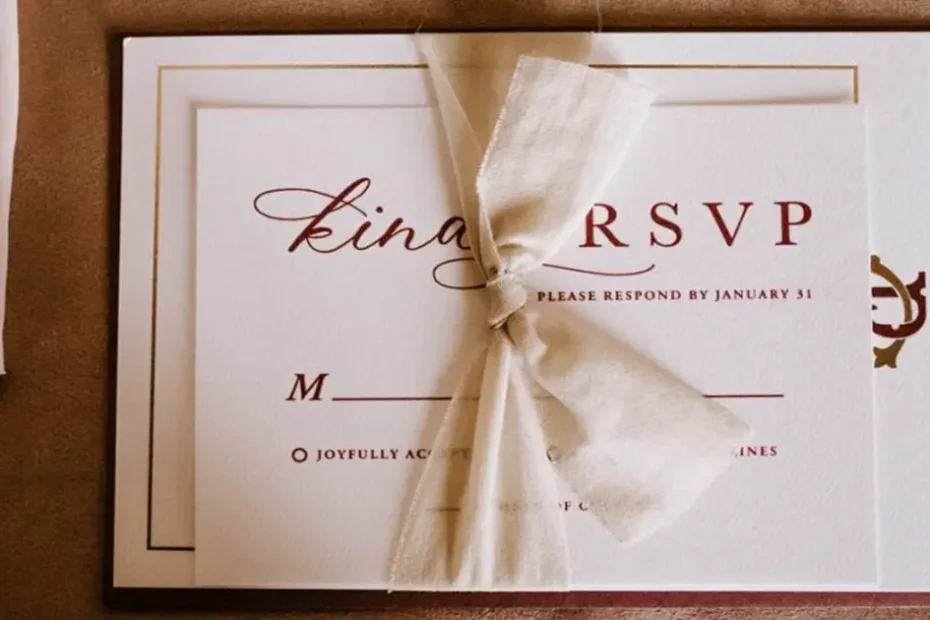
You’ve just opened a beautiful wedding invitation. Everything looks perfect—until you flip over the little response card and see a lonely “M” followed by a long blank line. Your brain freezes. Is it asking for your middle name? Your meal choice? Whether you’re married? How many people are coming?
Nope. None of the above. That mysterious M is one of those old-school etiquette details that only makes sense once someone explains it. And once you know, you’ll never stare at it in confusion again.
So What Does the M Actually Stand For?
The M is simply the first letter of a traditional courtesy title. Think Mr., Mrs., Ms., or Miss. The card is designed so you finish the title and then write your name right after it.
If your title is Mr., you write “r.” after the printed M and continue with your full name. If you go by Mrs., you finish it as Mrs. and add your name. Same idea for Ms. or Miss. It’s an old stationery convention that assumes most guests will use one of those four titles.
It’s not asking if you’re “maybe” coming. It’s not a code for “meal.” And it definitely isn’t requesting your middle initial. It’s just a formal way of collecting names.
How to Fill Out the M Line Without Overthinking It
The easiest approach is to stop treating the M like a separate question. Think of it as the start of the name field.
Here’s how it usually works in real life:
- Single guest using Mr.: write “Mr. James Rivera”
- Guest using Ms.: write “Ms. Priya Patel”
- Married couple: “Mr. and Mrs. James Rivera” (or whatever titles they actually use)
- Two people who aren’t married: list both names clearly
If the invitation includes a plus-one, you can add that person’s name on the same line. If it doesn’t, leave the extra name off—even if there’s space. Adding someone who wasn’t invited is one of those classic wedding faux pas that makes the hosts scramble later.
And please don’t return a blank card. Hosts use these responses to finalize their headcount. A card with no name creates detective work nobody wants to do three weeks before the wedding.
What If Your Title Doesn’t Start With M?
This is where the old tradition bumps into modern reality. Not everyone uses Mr., Mrs., Ms., or Miss. Some people prefer Dr., Mx., Professor, or no title at all.
Current etiquette (including guidance from Emily Post) is clear: use the title you actually prefer. If the printed M doesn’t work for you, simply write your preferred title and name on the line. Most hosts will understand. The goal is accurate information, not perfect adherence to 1950s stationery rules.
If you’re the couple designing the invitations, you have an even better option. Skip the M entirely. A clean line that says “Name(s):” removes all confusion. Guests of every background can fill it out without pausing to decode etiquette. Plenty of modern couples have already made this switch, and their response rates are happier for it.
Do You Even Need the M Anymore?
Short answer: no. The M line is a tradition, not a requirement.
Many couples now use simple “Name” fields, digital RSVPs, email, or even a text message. Emily Post has long recognized that the method matters less than the information. Hosts need to know who is coming (and sometimes which entrée they want). The stationery is just the vehicle.
I’ve seen couples stress over whether their response cards look “proper enough.” The truth is, clarity beats tradition every time. If your guest list includes doctors, non-binary friends, or people who simply don’t use titles, a straightforward name line is kinder and more practical.
While We’re Clearing Things Up: What Does RSVP Actually Mean?
Since we’re decoding tiny wedding words, let’s finish the job. RSVP comes from the French phrase “Répondez, s’il vous plaît,” which means “please reply.” It’s a polite request for a yes or no.
When an invitation says RSVP by a certain date, the hosts are counting on you to answer by then. Prompt replies help them lock in catering numbers, seating charts, and budget. Waiting until the last minute (or not replying at all) creates real headaches.
So the RSVP tells you to respond. The M line, when it appears, simply gives you a traditional place to write who is responding. Two different jobs, both useful.
Quick Recap for the Next Time You See That M
The M on a traditional RSVP card is the start of a courtesy title—Mr., Mrs., Ms., or Miss—followed by the guest’s name. Fill it out with the title and name that fit you. Include only the people who were actually invited. If the title doesn’t work for you, write what you prefer. And if you’re designing cards yourself, feel free to drop the M and use a plain “Name” line instead.
Once you understand it, the mystery disappears. The next time a little card arrives with that solitary M, you can smile, fill it out in ten seconds, and get back to deciding what to wear. No etiquette exam required.








Disclaimer:
This website is for informational and entertainment purposes only. We are not a real estate company and do not sell, list, or broker properties. We simply run a blog that shares interesting houses found on other websites.All real estate decisions should be made with licensed professionals. We cannot guarantee that the information here is always accurate or up to date. Use the content at your own discretion.